Customer Support AI: The 2026 Definitive Guide
How AI is transforming customer support in 2026 — the deflection economics, the modern stack, deployment playbook, common pitfalls, and the best vendors compared.
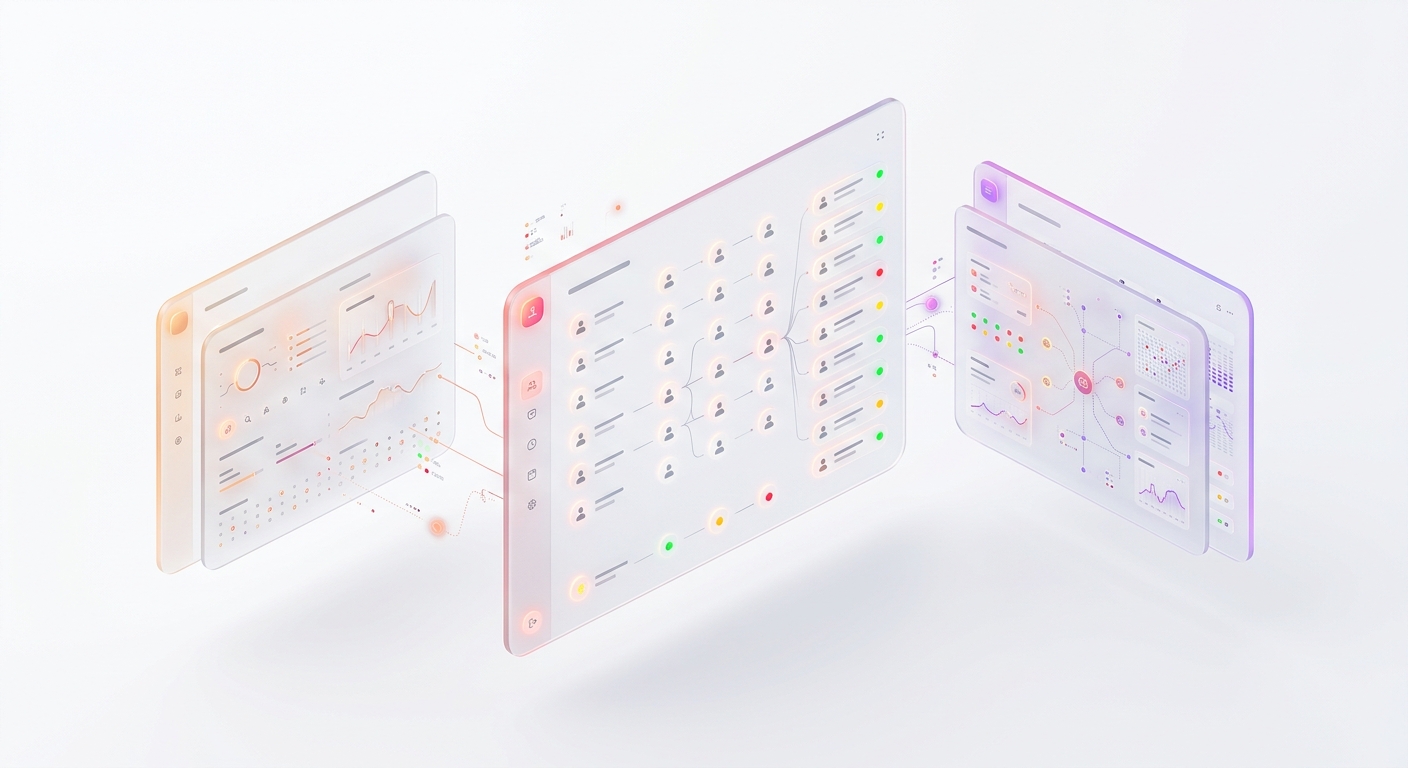
Customer support is one of the few domains where AI in 2026 has already moved past the hype curve. Deflection rates of 40–70% on tier-1 tickets are routine, and the best teams are reinvesting that capacity into higher-touch, revenue-impacting work. This is the practitioner's guide to getting it right.
- 1Customer support AI deflects repetitive tickets and augments — rather than replaces — human agents.
- 2The economics are now decisively positive: typical payback is 3–6 months at mid-market volume.
- 3Three components matter: the AI agent itself, the helpdesk integration, and the human-in-the-loop QA process.
- 4Avoid the temptation to over-automate. The CSAT cliff is real when escalation is too slow.
- 5Our top pick for SMB and mid-market support AI in 2026: Botsonic.
What customer support AI actually is
In 2026, "customer support AI" almost always means a combination of:
- A customer-facing AI agent (typically a chat widget) that answers questions grounded in your help center, policies and product docs.
- An agent copilot inside the helpdesk that drafts replies, summarises threads and suggests macros.
- A routing and automation layer that triages incoming tickets, prioritises VIPs and escalates emotional or complex cases to humans.
The biggest mistake mid-market teams make is treating these as separate products. The leverage compounds when they share a single source of truth (your knowledge base) and a single source of analytics (deflection, accuracy, escalation rate).
The deflection economics in 2026
Let's model a realistic mid-market scenario: a SaaS company with 25,000 monthly support contacts and a fully-loaded agent cost of $25 per ticket.
| Scenario | Tickets / mo | Cost / mo | Annual cost |
|---|---|---|---|
| Pre-AI baseline | 25,000 | $625,000 | $7.5M |
| 50% deflection via AI | 12,500 (human) | $312,500 + $499 (Botsonic Pro) | ≈ $3.75M |
| Net annual savings | — | — | ≈ $3.7M |
The modern customer support AI stack
- Knowledge layer — your help center, internal docs, product specs. Quality here is non-negotiable.
- AI agent — the customer-facing bot. Botsonic, Intercom Fin, Ada and Forethought are the main contenders.
- Helpdesk integration — Zendesk, Intercom, HubSpot, Freshdesk. The bot must escalate cleanly.
- QA + observability — sample reviews, unanswered-question reports, CSAT collection.
- Content ops — the team that closes the loop on what the bot couldn't answer.
How to deploy customer support AI without breaking trust
After supporting several deployments across SaaS and e-commerce, here is the rough sequence that works:
- Audit the knowledge base first. If your help center is contradictory, fix it before plugging in any AI.
- Pilot in a low-risk channel. Start with the website chat widget, not the email inbox. Failure modes are easier to recover from.
- Set a confident refusal policy. When the bot is unsure, it should say so and offer a human handoff — not guess.
- Define your CSAT cliff. If deflection rises but CSAT drops more than 5 points, you've automated too aggressively.
- Close the loop weekly. Resolve the top 20 unanswered questions every week. After 60 days the bot will be noticeably better.
Common pitfalls to avoid
- Start with one well-curated knowledge source
- Be explicit about scope and refusal behaviour
- Track deflection AND CSAT together
- Train agents to coach the bot via QA reviews
- Surface the unanswered-questions report weekly
- Don't ingest your entire wiki on day one
- Don't hide the escalation path
- Don't optimise for deflection alone
- Don't ignore the bot's failure modes
- Don't deploy without a DPA and SOC 2 report on file
Best customer support AI vendors in 2026
We've published a full ranked list. The short version:
- Best for SMB and mid-market: Botsonic by Writesonic — best balance of grounding, customisation and cost.
- Best inside an Intercom workspace: Intercom Fin — pricey but seamless.
- Best for high-volume ticket deflection: Ada and Forethought — enterprise-led implementation.
- Best for solo founders: Chatbase — simpler but lighter on capability.
Verdict
Customer support AI in 2026 is no longer a gamble. The technology works, the ROI is measurable, and the vendor landscape is mature. The teams that win are the ones treating it as a content + operations problem, not a software purchase. Start with one bot, one channel and one weekly review cadence — and grow from there.
Our top SMB/mid-market pick
Try Botsonic free — deploy a support bot in under an hour.